🩸 Unexplained Bruises: When It's Blood Tests, and When It's Liver or Platelets
Unexplained Bruises: Why They Appear, When It’s Blood Tests, and When It’s the Liver (Detailed Breakdown)
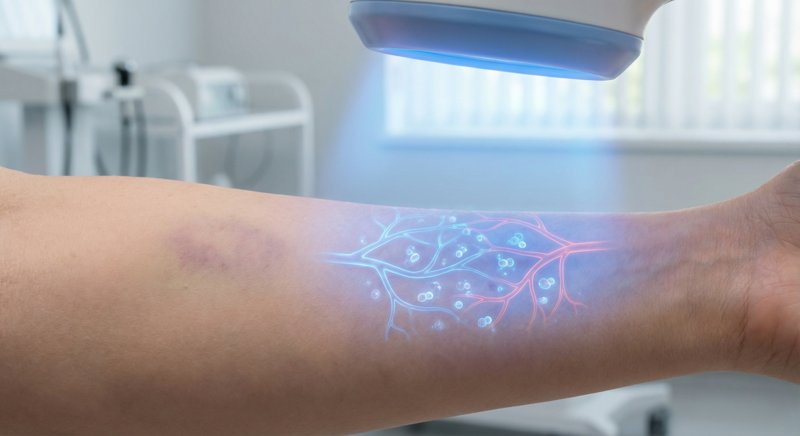
You wake up in the morning, go to the shower, and discover a picturesque bruise on your thigh, shimmering with all shades of purple. Memory helpfully remains silent: you definitely didn’t fall down the stairs, didn’t fight in a bar, and didn’t even seem to hit the corners of the bed. The first reaction of a normal person in the era of the Internet is to open a search engine. Five minutes later, you are already “diagnosing” yourself with leukemia, cirrhosis, and a couple more diseases with unpronounceable names.
Let’s exhale. Hematology is an exact, logical science that does not tolerate hysterics. Bruises (or, in medical terms, hematomas and ecchymoses) are always a consequence of blood leaving the vascular bed. The only question is why it did it: because the “pipe” (vessel) leaked, or because the “cement” (clotting system) stopped working.
Today, we, the Wizey AI team, will analyze this issue from the point of view of evidence-based medicine. Without horror stories, but also without illusions.
What Is a Bruise from a Physiological Point of View (In Simple Terms)
Short answer: A bruise is the soaking of soft tissues with blood spilled from a damaged vessel. This is a marker that the hemostasis system (stopping bleeding) did not work instantly or the vascular wall turned out to be too fragile for the applied pressure. The color of the bruise is given by hemoglobin and its breakdown products (biliverdin, bilirubin).
If we go into details, our body is a closed system under pressure. Blood must be inside the vessels. To prevent it from leaking out, we have three lines of defense:
- Vascular wall — must be elastic and strong.
- Platelets — blood cells that are the first to rush to the scene of the accident and plug the hole (primary hemostasis).
- Plasma clotting factors — proteins that form a dense fibrin mesh, finally cementing the thrombus (secondary hemostasis).
The appearance of a spontaneous bruise means a failure at one of these stages. Either the vessel burst from the slightest touch, or there are few platelets (or they are “lazy”), or there are not enough clotting proteins.
Why Bruises Appear Without Visible Cause: Main Mechanisms
Short answer: Most often there are three reasons: pathology of the vascular wall (vasculitis, vitamin deficiency, age), problems with platelets (few of them or they do not work) or deficiency of clotting factors (liver pathology, taking anticoagulants, genetics). Less often — hormonal disruptions.
Let’s break down each reason, because “just weak vessels” is not a diagnosis, but an excuse.
1. Platelet Link (When the “Repair Crew” Didn’t Arrive)
Platelets are consumables. They live only 7–10 days. If the bone marrow does not have time to produce them or the immune system begins to destroy them (autoimmune thrombocytopenia), problems arise.
- Symptoms: Fine rash (petechiae) and small bruises arising from light pressure. Often accompanied by bleeding gums.
- Nuance: It happens that the number of platelets is normal, but they are functionally defective (thrombocytopathy). They “see” a hole in the vessel, but do not stick to it. This often happens while taking NSAIDs (aspirin, ibuprofen).
2. Vascular Wall (“Pipe” Problem)
With age, the amount of collagen and elastin in the walls of blood vessels decreases. This is a natural process called senile purpura. Vessels lose the support of the surrounding connective tissue and burst from the friction of clothing. But if you are 30 years old and covered in bruises — this is a reason to check the level of Vitamin C (it is critically important for collagen synthesis) and exclude systemic vasculitis (inflammation of the vascular walls).
3. Coagulopathies (“Cement” Problem)
Here proteins dissolved in plasma come into play. The most famous example is hemophilia, but this is rare genetics. Much more often we encounter acquired problems:
- Vitamin K deficiency: Without it, key clotting factors are not synthesized.
- Medications: Warfarin, heparins, new oral anticoagulants (NOACs) — their direct task is to prevent blood from clotting. Overdose = bruises.
Liver, Vitamins, or Genetics: Where to Look for the Root of Evil?
Short answer: The liver is a biochemical factory for the production of clotting factors. If the liver suffers (fatty hepatosis, hepatitis, cirrhosis), the blood stops clotting normally. Genetics (von Willebrand disease) is more common than is commonly thought, and can manifest only as bruises.
This is perhaps the most unobvious moment for patients. “Doctor, I have a bruise on my leg, what does my liver have to do with it?” — a classic question.
And the fact is that the liver synthesizes almost all blood clotting factors (except for von Willebrand factor and calcium). If liver cells are busy surviving (against the background of alcohol intoxication, viral attack, or fatty liver), they have no time for protein synthesis.
- Markers: If, along with bruises, you see spider veins on the face and chest, redness of the palms (“liver palms”) — this is a direct signal to check the liver.
Genetics can also be insidious. Von Willebrand disease (violation of platelet “gluing”) can occur in a very mild form. A person thinks all his life that he “just has such skin” until he gets to the dentist for tooth extraction and gets prolonged bleeding.
What Blood Tests to Take If You “Bloomed”
Short answer: You need to start with the clinical minimum: Complete Blood Count (CBC) with platelets + Coagulogram (APTT, INR, fibrinogen). If there are deviations there — add biochemistry (ALT, AST, bilirubin) and specific tests.
You don’t need to immediately take genetic panels for half a salary. We go from simple to complex. Here is your “gold standard” of diagnostics:
- Complete Blood Count (CBC) with Leukocyte Formula.
- What we look at: Platelet level (norm usually 150–400 * 10^9/L). We also look at hemoglobin (is there anemia due to hidden blood loss) and leukocytes (exclude inflammation or oncohematology).
- Coagulogram (Hemostasiogram).
- APTT (Activated Partial Thromboplastin Time): Shows the effectiveness of the internal clotting pathway.
- Prothrombin (according to Quick) and INR: Evaluates the external clotting pathway. Critically important if you are taking warfarin or there are suspicions about the liver.
- Fibrinogen: “Building material” for a thrombus.
- Blood Biochemistry.
- ALT, AST, Bilirubin, GGT: Assessment of liver function.
- Ferritin: Sometimes iron deficiency makes tissues more vulnerable.
Important: If you take dietary supplements (omega-3, ginkgo biloba, Vitamin E in large doses), they can also affect clotting, although this is not always visible in standard tests.
When Is It a Cause for Alarm: “Red Flags”
Short answer: Urgently to the doctor if: bruises appear on the trunk (back, stomach), they are large and bumpy, there are nose/gum bleeds, blood in stool or urine, temperature rises, lymph nodes are enlarged.
A bruise on the shin that you forgot about (hit the bedside table) is normal. But there are signs that scream that the system has failed systemically.
Checklist of dangerous symptoms:
- Localization: Bruises on legs and arms are often traumatic. Bruises on the back, stomach, ears are almost always pathology.
- Symmetry: Bruises appear symmetrically on both limbs.
- Hemarthrosis: Hemorrhages into the joints (the knee suddenly swelled and turned blue) — a sign of severe deficiency of clotting factors.
- Concomitant symptoms:
- Night sweats and subfebrile temperature (37.2–37.5) without signs of a cold.
- Sharp weight loss.
- Heavy menstruation in women (have to change hygiene products more often than once every 1–2 hours).
- Petechial rash (small red dots that do not disappear when pressed) around the bruise.
In these cases, waiting for it to “pass by itself” is the worst strategy.
What to Do Step by Step: Action Algorithm
Short answer: 1. Remember injuries and medications. 2. Take CBC and coagulogram. 3. Upload results to the analytical system for initial assessment. 4. Go to a therapist or hematologist with a ready picture. Do not smear with badyaga until the cause is clear.
If you notice that your body has begun to resemble a map of the world with purple continents, act systematically:
- History taking (even for yourself).
- What medications have you taken in the last 2 weeks? (Aspirin, ibuprofen, antidepressants, steroids).
- Have there been changes in diet? (Strict diets can lead to deficiency of vitamins C and K).
- Laboratory diagnostics.
- Take the basic package: CBC + Platelets + Coagulogram. It is inexpensive and informative.
- Data analysis.
- Having received a form with a bunch of numbers, it is difficult to understand: platelets 145 — is this already a disaster or a variant of the norm? APTT increased by 2 seconds — is it scary?
- Here it is easy to fall into panic or, conversely, miss the important thing.
- Visit to the doctor.
- With the results, we go to the therapist. If there are deviations in the blood formula — you will be redirected to a hematologist. If in liver tests — to a gastroenterologist.
By the way, about interpretation. It is at the stage of receiving test results that the most questions arise. Laboratory references are often averaged, and the relationships between, for example, low hemoglobin, slightly elevated bilirubin, and borderline platelets are not obvious to a non-specialist.
Upload your tests to Wizey AI. The system will not just check the numbers against the norms, but will also help see non-obvious relationships (for example, suspect a liver trace in clotting problems) and form a list of questions for your doctor. This will save you time at the appointment and help the specialist figure out the situation faster.
Frequent Mistakes and Myths
Short answer: You cannot strengthen blood vessels only with vitamins if the problem is in platelets. Ascorutin is not a panacea. Iodine grid on a bruise is useless and can cause a burn. Bruises are not always “thick blood” that needs to be thinned.
- Myth: “I have thick blood, I need to drink aspirin.”
- Reality: This is the most dangerous mistake. If you have bruises due to poor platelet function or deficiency of clotting factors, taking aspirin (which is an antiplatelet agent) can cause massive bleeding, up to gastric. Never prescribe blood thinners to yourself without a doctor.
- Myth: “I’ll drink ascorutin, and everything will pass.”
- Reality: Ascorutin (Vitamin C + rutin) works only if the cause is capillary fragility against the background of hypovitaminosis. With thrombocytopenia or hemophilia, it is useless, like a plantain for a fracture.
- Myth: “Bruises are only in old people.”
- Reality: Autoimmune diseases and debuts of hematological problems often happen in young people 20–40 years old.
- Myth: “Need to smear with heparin ointment.”
- Reality: The ointment will accelerate the resorption of an already existing bruise (improve microcirculation), but will not prevent the appearance of new ones if you have a systemic failure.
Mini-FAQ: Briefly about the Main Thing
Q: Why do bruises appear more often in women than in men? A: Women have thinner skin, and subcutaneous fat has a different structure. Plus estrogens affect the strength of the vascular wall — cycle fluctuations can make blood vessels more fragile.
Q: Can stress cause bruises? A: Indirectly. Chronic stress increases cortisol levels. Excess cortisol (or taking steroid drugs) thins the skin and vascular walls, leading to easy hemorrhages.
Q: Does sugar affect blood vessels? A: Yes. High glucose levels (glycation of proteins) destroy collagen in the vascular wall, making it fragile. Diabetic angiopathy is a frequent cause of microcirculation problems.
Q: If a bruise does not go away for a long time and has become hard, what to do? A: Perhaps the blood inside has encapsulated (a capsule has formed). This is a risk of suppuration. Need to do an ultrasound of soft tissues and, possibly, a puncture by a surgeon.
Conclusion
The appearance of bruises is not always a reason to write a will, but it is not a cosmetic defect that can be ignored for years. Our body is a smart system, and through the skin, it often signals malfunctions in the “engine room” — in the bone marrow or liver.
Your task is not to panic, but to collect data. Modern medicine allows you to quickly find the cause of the breakdown, whether it is a banal lack of vitamins or a complex immune failure.
The main thing is not to engage in reading tea leaves. Take tests, upload them to Wizey AI to structure information, and go to the doctor prepared. Understanding your body is the best insurance against unnecessary anxiety.
Take care of yourself and your blood vessels! The Wizey AI Team